operational
Recurring issues are rarely just support issues
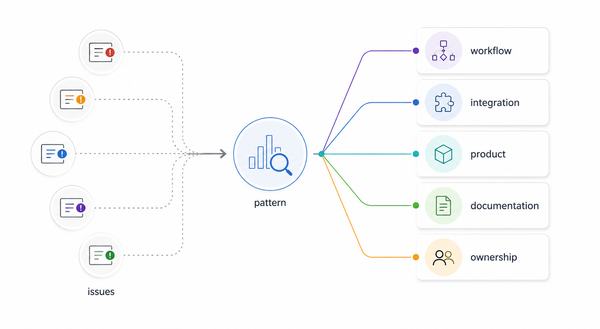
Repeated issues are more than operational noise. They can reveal weaknesses in workflows, integrations, product behavior, ownership, or documentation.
operational
Repeated issues are more than operational noise. They can reveal weaknesses in workflows, integrations, product behavior, ownership, or documentation.
solution design
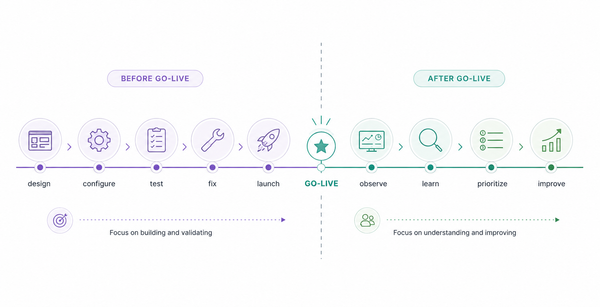
Before go-live, the main question is whether a solution is ready. Afterwards, the challenge becomes understanding how it behaves in reality and what needs attention.
platform strategy
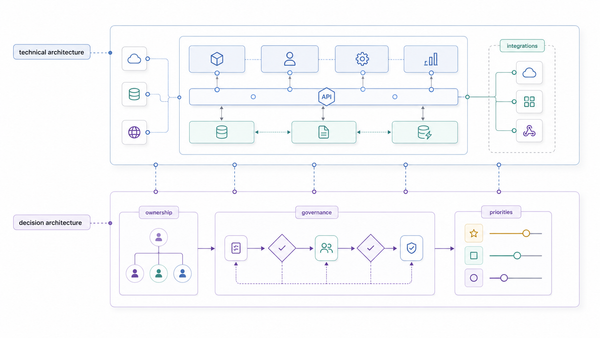
Platform projects are shaped by more than systems and integrations. They are also shaped by the way decisions are made, owned, and resolved across teams.
solution design
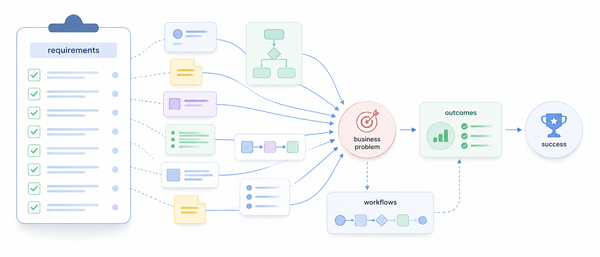
Many platform projects collect detailed requirements but never clearly define the problem they are trying to solve. That missing context often matters more than the feature list.
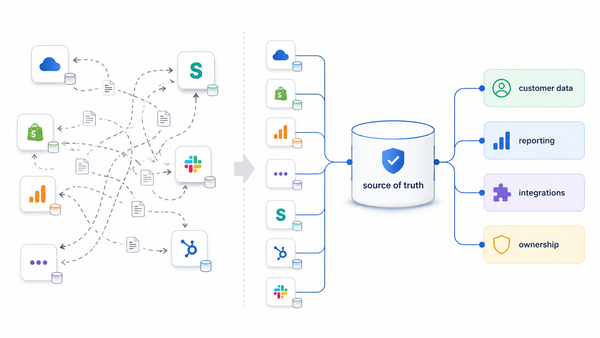
data
Many data issues appear technical at first. In practice, unclear ownership, accountability, and business rules are often the real source of the problem.
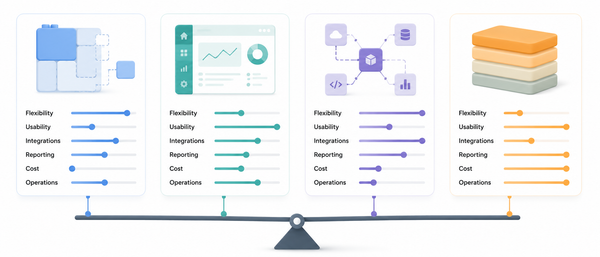
platform strategy
Most platform decisions are not about finding the perfect solution. They are about understanding trade-offs and choosing the compromises that fit the organization best.
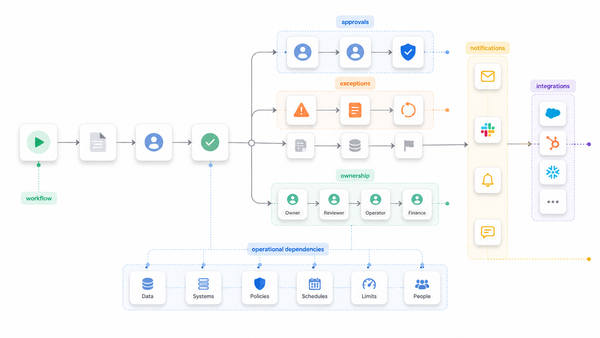
workflows
Many workflows look simple during platform selection or demos. The real complexity often appears later through exceptions, ownership, integrations, governance, and operational reality.
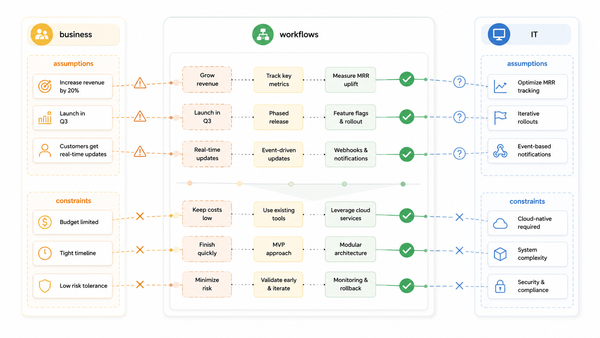
business and IT
Business and IT teams often look at the same platform project through different lenses. Many misunderstandings come from hidden assumptions, unclear language, and conflicting operational realities.
technical discovery
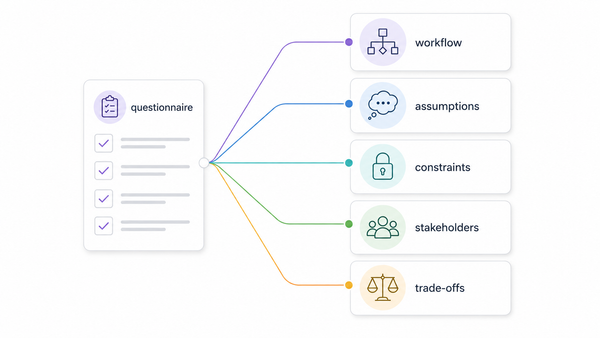
Technical discovery is not only about collecting answers. It is about reducing ambiguity, understanding workflows, exposing assumptions, and designing a solution that can work in practice.
integrations
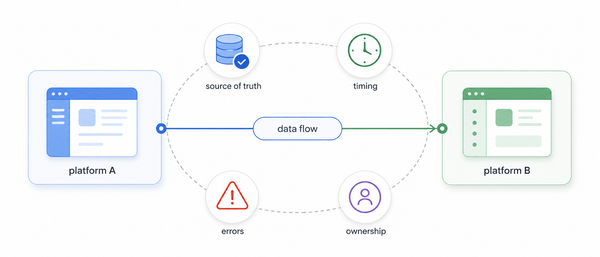
An integration is not only about connecting two systems. It is about making data, workflows, ownership, timing, and failure handling work together.
platform strategy
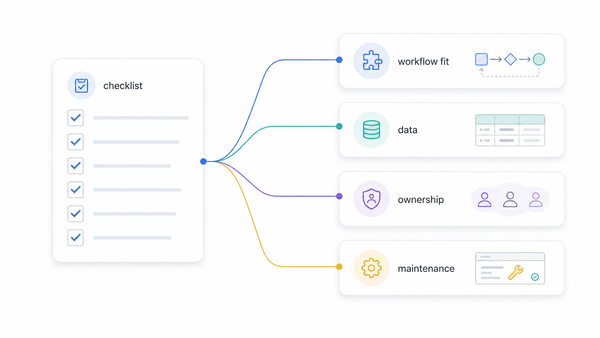
A platform can meet a requirement on paper and still create problems in practice. The real question is not only whether a feature exists, but how it works.
solution design
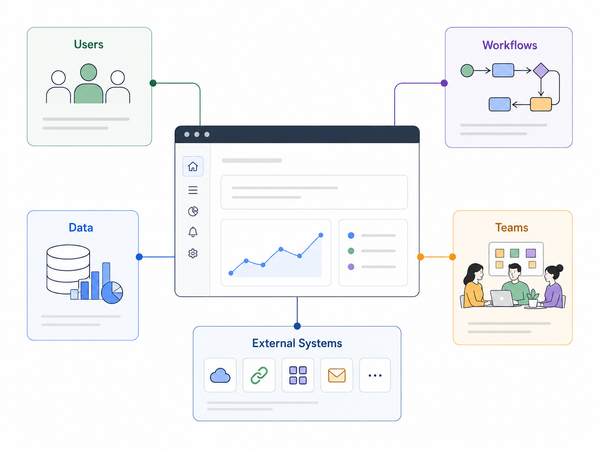
Choosing a platform is not only about features. It is also about business fit, system fit, and operating fit.