Data problems are often ownership problems
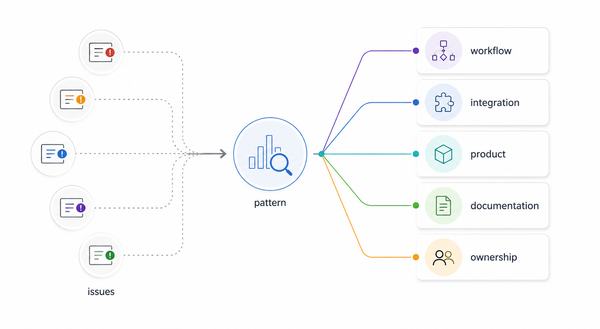
Many data issues appear technical at first. In practice, unclear ownership, accountability, and business rules are often the real source of the problem.

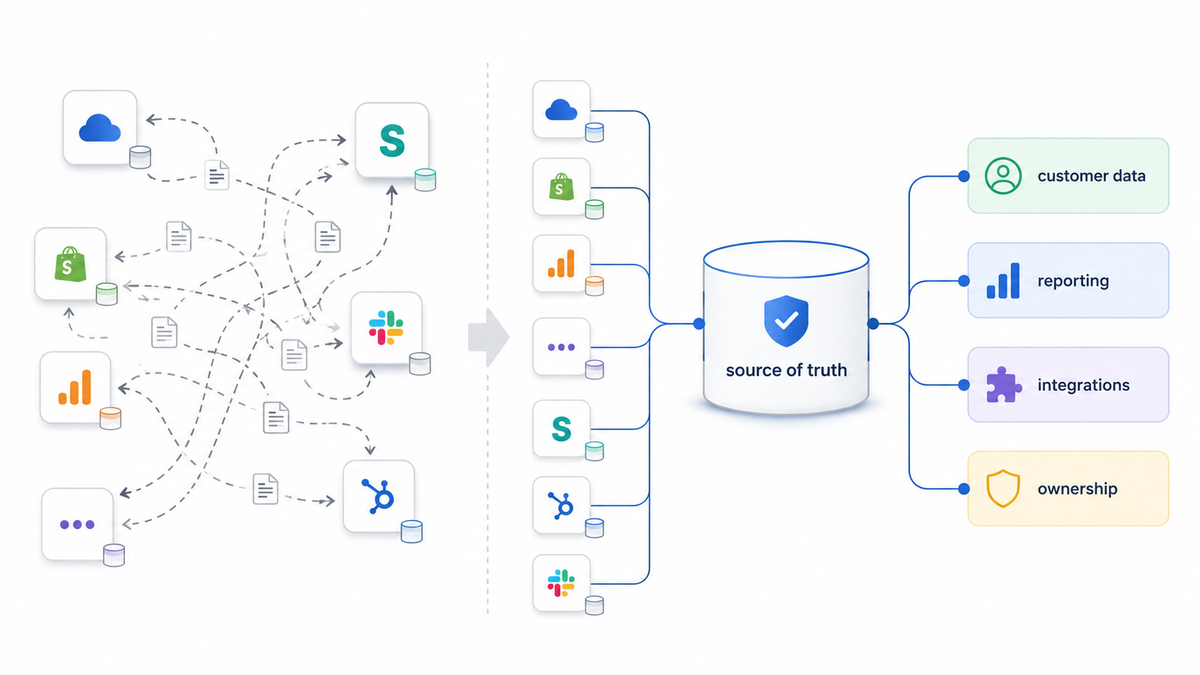
Most platform projects eventually run into a data problem.
The report is wrong.
The dashboard does not match expectations.
Users appear twice.
Records are missing.
Two systems disagree.
An integration produces inconsistent results.
The first reaction is often technical.
Teams start looking at APIs, synchronization jobs, mappings, imports, exports, transformations, or platform limitations.
Sometimes the issue is technical.
But not always.
Many data problems begin much earlier.
They begin with ownership.
The data exists, but nobody owns it
One of the most common situations is surprisingly simple.
The data exists.
Everyone uses it.
Several systems depend on it.
But nobody is clearly responsible for maintaining it.
When the data becomes unreliable, different teams assume someone else owns the problem.
The result is predictable.
Quality slowly degrades.
Exceptions accumulate.
Workarounds appear.
Reports become less trusted.
Eventually the discussion becomes technical because the underlying ownership question was never resolved.
Every important piece of data needs a home
Most organizations have information that exists in multiple places.
Customers.
Users.
Products.
Permissions.
Organizations.
Transactions.
Learning records.
Contracts.
The question is not whether multiple systems contain the information.
The question is:
Which system owns it?
A platform may display customer information without owning it.
A reporting system may use transaction data without owning it.
A SaaS application may consume user identities without owning them.
Clear ownership creates clearer integrations.
Unclear ownership creates reconciliation projects.
Integrations expose ownership issues
Integrations often receive the blame for data problems.
But many integrations simply reveal issues that already existed.
Two systems disagree because different teams update different records.
A synchronization fails because a required field was never maintained.
Reports are inconsistent because the business uses multiple definitions of the same metric.
The integration becomes the visible symptom.
The root cause often sits elsewhere.
The source of truth is a business decision
People often describe the source of truth as a technical concept.
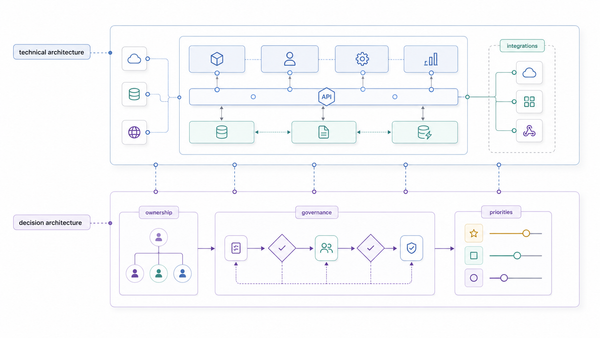
In reality, it is usually a business decision with technical consequences.
Choosing a source of truth means deciding:
Who creates the data?
Who can change it?
Who validates it?
Who resolves conflicts?
Who defines the rules?
Technology supports those decisions.
It does not replace them.
Reporting depends on trust
Most reporting problems are trust problems.
If people do not trust the data, they stop trusting the reports.
When that happens, teams create manual exports, spreadsheets, shadow systems, and local corrections.
The organization starts maintaining multiple versions of reality.
At that point, the reporting platform is rarely the main issue.
The challenge is confidence in the underlying data.
Good data starts with accountability
Data quality is often discussed as a technical topic.
But sustainable data quality usually comes from accountability.
Someone owns the data.
Someone understands the rules.
Someone resolves exceptions.
Someone maintains consistency over time.
Without that foundation, even well-designed platforms and integrations will struggle.
The real question
When a data issue appears, it is tempting to ask:
What is wrong with the system?
Sometimes a better question is:
Who owns this information?
The answer often explains more than the technical investigation.