There is rarely a perfect platform
Most platform decisions are not about finding the perfect solution. They are about understanding trade-offs and choosing the compromises that fit the organization best.

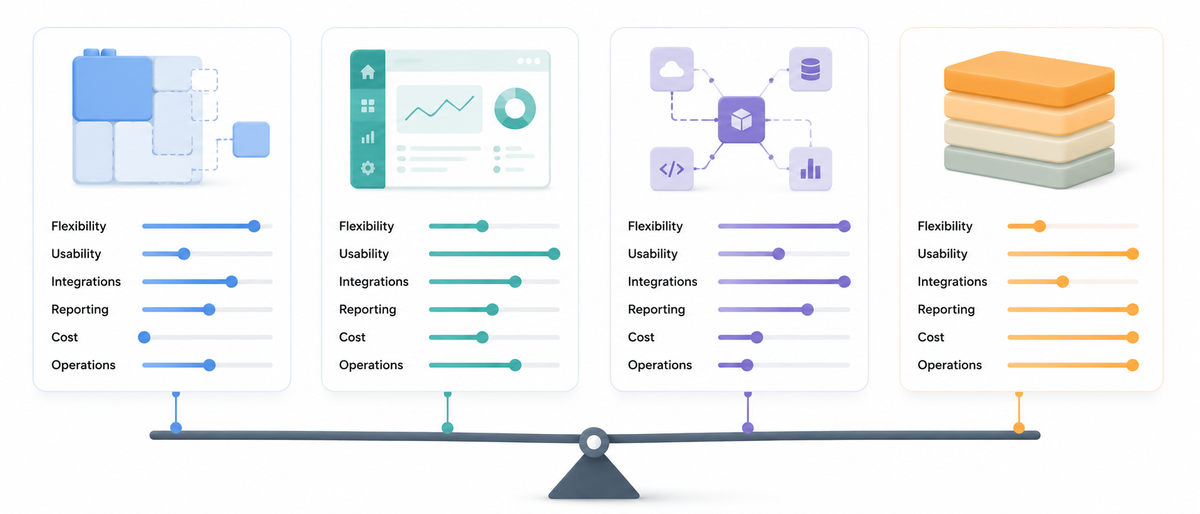
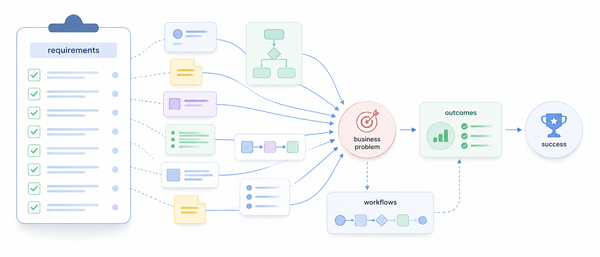
Most platform evaluations begin with the search for the best solution.
Teams compare features, integrations, reporting capabilities, user experience, pricing, security requirements, and implementation approaches.
The goal sounds simple.
Find the platform that meets all requirements.
In practice, that platform rarely exists.
Most decisions involve trade-offs.
One platform may offer stronger workflows but weaker reporting.
Another may provide better integrations but require more configuration.
Another may be easier to use but less flexible.
Another may fit current needs perfectly while raising questions about future scalability.
This does not mean platform selection is impossible.
It means the objective is often misunderstood.
The goal is not perfection
Many evaluation processes assume there is a hidden winner waiting to be discovered.
If enough demonstrations are scheduled and enough spreadsheets are completed, the best platform will eventually reveal itself.
What usually happens instead is that strengths and weaknesses become clearer.
The discussion shifts from:
Which platform is best?
to:
Which compromises are we most comfortable making?
This is often where the real decision begins.
Every strength comes with a consequence
Flexibility often creates complexity.
Standardization often creates constraints.
Customization often creates maintenance.
Automation often creates dependencies.
Powerful reporting often creates data governance questions.
Rich integrations often create operational ownership requirements.
These are not flaws.
They are consequences.
Understanding those consequences is often more useful than comparing feature counts.
Trade-offs are easier to discuss than preferences
Teams sometimes struggle because they compare preferences instead of trade-offs.
One stakeholder prefers usability.
Another prefers flexibility.
Another prefers lower cost.
Another prefers architectural consistency.
These conversations can feel subjective.
Trade-offs create a more useful discussion.
Instead of asking:
Which option do you prefer?
Ask:
Which compromise are we willing to accept?
That question tends to produce clearer decisions.
The best platform is context-dependent
A platform that works well for one organization may be a poor choice for another.
The business model may be different.
The operating model may be different.
The internal capabilities may be different.
The ecosystem may be different.
The priorities may be different.
This is why copying another organization's platform choice rarely guarantees success.
The context matters as much as the product.
Good decisions acknowledge what is missing
One of the most reassuring signs during a platform evaluation is when teams can clearly explain what they are giving up.
Not because the decision is weak.
Because it shows they understand it.
Every platform has limitations.
Strong decisions happen when those limitations are visible, understood, and accepted deliberately.
The real question
The best platform is rarely the platform with the longest list of strengths.
It is the platform whose trade-offs fit the organization best.
And that is why platform selection is usually less about finding perfection and more about making informed compromises.