Go-live changes the questions
Before go-live, the main question is whether a solution is ready. Afterwards, the challenge becomes understanding how it behaves in reality and what needs attention.

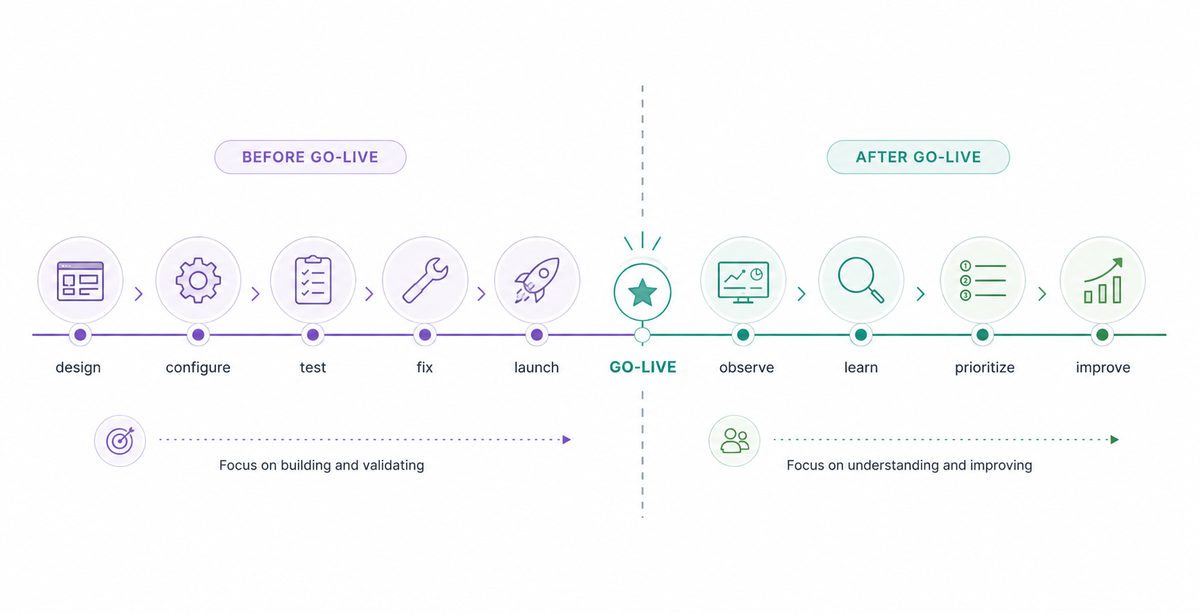
Before go-live, a platform project tends to revolve around a familiar set of questions.
Does the solution work?
Are the integrations ready?
Have the main scenarios been tested?
Are the remaining issues acceptable?
Can we launch?
These are important questions because the objective is clear: get the solution into production safely.
But once the platform is live, the nature of the problem changes.
The question is no longer simply:
Does it work?
It becomes:
How do we know it keeps working well?
That shift can be easy to underestimate.
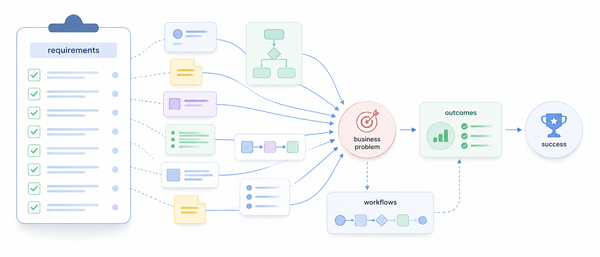
Before go-live, success is relatively visible
During implementation, teams usually work towards identifiable milestones.
A configuration is completed.
An integration passes a test.
A defect is fixed.
A workflow is validated.
A launch decision is made.
Progress can be observed against a plan.
After go-live, the signals become less obvious.
A platform may be available while some users are struggling with a workflow.
An integration may be running while a small percentage of transactions require manual correction.
A process may technically work while creating more operational effort than expected.
The absence of a major incident does not necessarily mean that everything is working well.
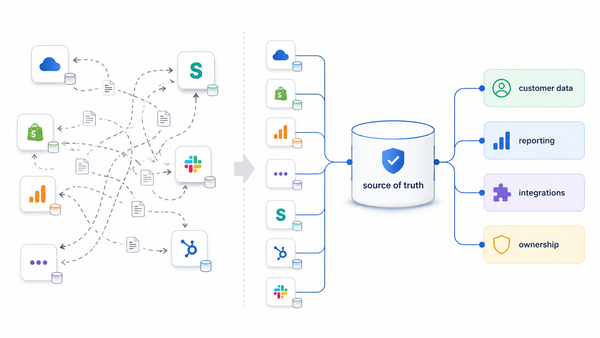
Production creates different evidence
Once real users, real data and real volumes enter the system, new questions appear.
Where are users getting stuck?
Which errors happen repeatedly?
Which exceptions consume the most time?
Are integrations behaving as expected over time?
Are teams compensating manually for something the system should handle?
Are the assumptions made during implementation still true?
These questions are difficult to answer from the original project plan.
They require operational evidence.
That evidence may come from monitoring, support tickets, logs, customer feedback, usage patterns, reconciliation, or simply recurring conversations with the people operating the platform.
The important point is not the tool used to collect it.
It is that operating a platform requires a different kind of visibility from implementing one.
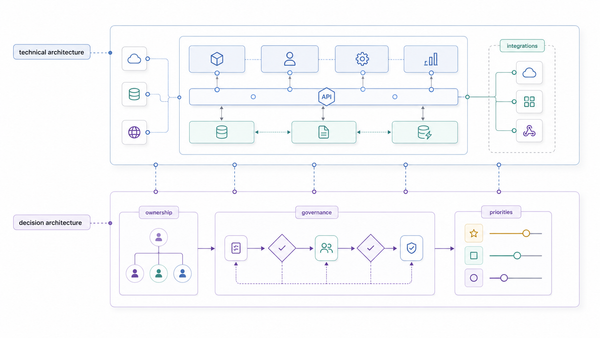
Ownership also changes
During a project, ownership is often relatively explicit.
There is a project team.
There are implementation responsibilities.
There are milestones and meetings.
Someone is driving towards launch.
After go-live, that temporary structure often disappears.
The platform becomes part of normal operations.
This can expose questions that were less visible during implementation.
Who owns recurring integration issues?
Who decides whether a workflow should change?
Who investigates when data looks wrong?
Who decides which improvements matter most?
Who connects patterns seen by support, product, technical teams and business users?
These are not necessarily gaps in the implementation.
They are questions created by the transition from project ownership to operational ownership.
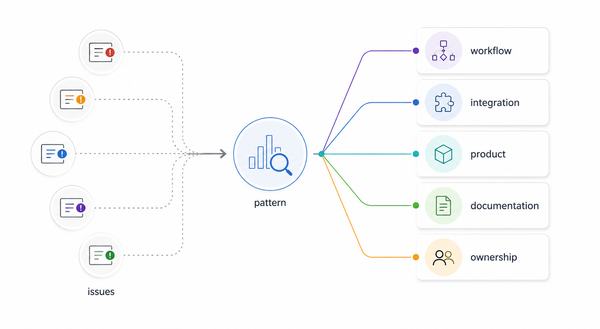
Some problems only become visible as patterns
A single issue can look insignificant.
A user needs manual help.
A synchronization fails once.
A team makes a small workaround.
A customer asks an unusual question.
Individually, these may not justify changing anything.
But when similar events happen repeatedly, they become information about the system.
The recurring support request may point to an unclear workflow.
The repeated manual correction may reveal a missing business rule.
The integration error may expose an assumption about data that does not always hold.
The unusual customer question may actually represent a common use case that was never considered explicitly.
This is one reason operations should not be seen only as maintenance.
Operations create information that was unavailable during design.
The objective changes from launch to learning
Before go-live, uncertainty needs to be reduced enough to launch responsibly.
After go-live, uncertainty never disappears completely.
Instead, teams need ways to learn from what actually happens.
Which assumptions were correct?
Which ones need revisiting?
Where is friction appearing?
What deserves intervention?
What is simply an acceptable edge case?
What should be improved now, and what can wait?
Not every problem needs a new feature.
Not every exception needs automation.
And not every complaint indicates a design failure.
The challenge becomes distinguishing noise from patterns and deciding where attention creates the most value.
A platform is never really finished
Go-live is a meaningful milestone, but it separates two different kinds of work.
Before it, the focus is on making the solution ready.
After it, the focus shifts towards understanding how the solution behaves in reality.
That requires different questions, different evidence and often different forms of ownership.
A successful launch tells us that a platform is ready to operate.
What happens afterwards tells us whether it actually works well inside the organization.
Go-live does not end the questions.
It changes them.